The Wrongdoer's Standing
On this page
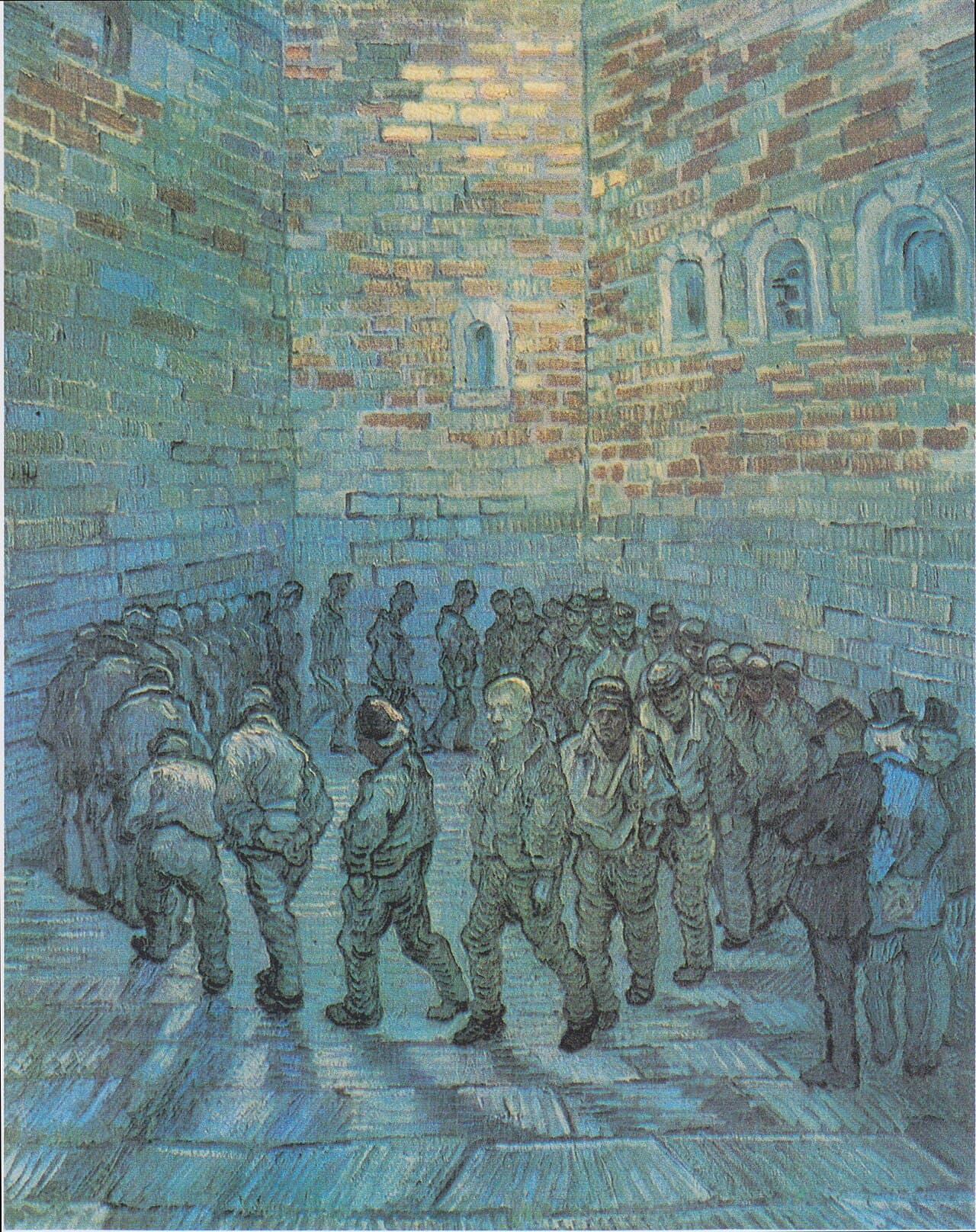
.jpeg)
Summary
Standing and Answerability Ethics extends Standing to everyone, including those actively committing the wrongs it condemns. Standing cannot be earned or forfeited and does not vary with innocence, so wrongdoing cannot remove it: the owner, the official, the beneficiary, and the enemy remain someones. The framework's defended means-bound and possession principles deny that a cause may convert them into material for its purposes; exclusion under any number of jointly pressing claims further depends on disputed pairwise exhaustion.
The position is easily misread in both directions, and the page's main work is calibration. Standing is not immunity: wrongdoers may be resisted, constrained, judged, made to answer, and stopped by force where force is what stopping requires. The extension is not a pacifist demand on the oppressed: the framework expressly denies that those subjected to domination owe patience, gentleness, or a duty to lose. The source distinction runs not between violence and nonviolence but between stopping a wrong and consuming the wrongdoer; Constraint of Persons develops that distinction into five defended conditions.
Under the proposed claim-relative culpability screen, culpability can support accurate attribution or satisfy a fault condition in an independently grounded relation. It does not alter standing, establish danger, or generate a burden by itself.
Derivation: Standing's foundational equality and non-forfeitability, over the derived party floor, from which the wrongdoer's standing is derived; Possession's three marks and the defended means-bound, which bar the wrongdoer's conversion; the proposed claim-relative culpability screen; and Constraint of Persons, which develops the defended stopping/consuming line.
The core claim and its basis
Standing has no conduct condition. Standing holds that standing cannot be earned or forfeited and does not vary with innocence, so wrongdoing cannot disqualify its holder. The defended means-bound adds a claim-content result: no protection, rescue, or resistance claim includes the wrongdoer's conversion. Rejecting that defended commitment leaves universal standing intact while removing the claim-content restriction. Exclusion of conversion from the eligible option set at every scale also depends on pairwise exhaustion, which remains open.
Given the means-bound, possession's ineligibility, and pairwise exhaustion, the practical consequence is a constraint on causes: opponents may be defeated but not used. A movement may end what a wrongdoer does; it may not run on the wrongdoer — on their suffering as gratification, their persistence as fundraising, their existence as the proof of the movement's virtue.
A hamlet's irrigation channel
Case: A landowner's foreman dams a hillside hamlet's irrigation channel, and its crops start to fail. Residents break the dam and post a watch against rebuilding it. Catching the foreman trying, the hamlet votes to keep him under guard, unpaid, digging its new reservoir: his health cannot cut the work short, no one outside the vote can review it, and the reservoir's cost is saved only through his confined labour.
Verdict: The hamlet may end what the foreman was doing, as breaking the dam and keeping the watch do. The guarded labour runs on him: on these facts it bears possession's three marks, and under the defended means-bound no resident's claim to the water includes his conversion. Whether their claims pressed jointly could admit it turns on pairwise exhaustion, which stays open.
Machinery: The core claim and the means-bound it rests on; possession's three marks; the scale dispute for the joint case.
Cost: The verdict does not settle what repair is owed or whether the watch meets each constraint condition. Refusing the means-bound lets the crop loss bring the labour into the option set, and keeps the foreman's standing, the classification, and the verdict on the dam; refusing the three-mark test leaves whether the labour is conversion a dispute over labels.
What the position does not claim
The framework states these exclusions with emphasis, because demands for restraint have a documented history as instruments of domination — counsels of patience issued to the oppressed precisely when resistance becomes effective. The position is not that:
- force is wrong as such;
- the dominated must exhaust gentleness before resisting, or resist only in ways comfortable to those they resist;
- anyone owes their oppressor a fair fight, or bears a duty to lose.
On the framework's account, people subjected to domination hold full standing to end it by the means their situation actually affords. The constraint below limits what resistance may become, not whether it may occur.
The line: stopping versus consuming
Defensive force
Defensive force is oriented by the wrong it aims to end: it targets what sustains the wrong, treats the wrongdoer as someone who can cease to be a threat, and ends when the threat ends.
Consumption
Consumption is oriented by the cause's own needs: the wrongdoer retained as a resource — an object of hatred that organizes, a suffering that satisfies, a permanent adversary whose existence justifies the movement. It becomes Possession where the cause subordinates the person's central interests to that purpose, leaves no channel capable of ending the use for the person's sake, and secures its benefit through the person's condition. The same structure can turn inward: infrastructuralized movements may consume members' grief and endurance as organizational fuel.
The line is made more specific by the five conditions at Constraint of Persons: constraint must be keyed to a differentially evidenced danger or need, least-subordinating, terminating, limited by the constrained party's good, and answerable through a route the constrainer does not control. Two source questions remain especially useful within those conditions:
- Who does the force answer? Structures have no one whose surrender ends them. Force is warranted toward those who drive a wrong; under Standing Answerability and Arrangements and Lives, those who merely occupy its positions — who hold gates they did not build, dependent on arrangements they did not design — retain claims that must enter the action map.
- Does the wrong end by winding down, or only by being stopped? Exit from Wrongful Structures distinguishes immediate cessation from the limited case of a necessity frontier. Domination that ends only when stopped is what defensive force is for. Consumption fails the terminating condition structurally: because it is not organized by the threat, no state of the wrongdoer ends it.
A water plant's night shift
Case: A technician fired that morning from a town's water plant uses unrevoked credentials to push the chlorine dose toward a dangerous level. Supervisors hold him in the break room until his access is cut, twenty minutes later. The manager then orders him kept there overnight, behind the glass wall, "so the night shift sees what happens to anyone who touches the dosing." He has no other route to the system.
Verdict: The first hold may be keyed to stopping the danger, which his live access enabled. The overnight hold is not; it retains him as spectacle after the threat has ended. His conduct forfeited none of his standing; continued restraint requires a new ground, and the old threat cannot become a standing title over him.
Machinery: The core claim, from Standing's unforfeitable status; defensive force ends when the threat ends, as the terminating condition also requires.
Cost: The verdict does not decide whether the first hold met every constraint condition or what response the sabotage warrants; the line's application to institutional punishment is developed at Standing-Based Punishment Ethics. A reader who holds standing forfeitable by wrongdoing can accept the order and keeps the first hold, which rests on a live danger; one who refuses the five conditions keeps the verdict on this page's own line.
Contestable application
The framework concedes a serious limit and treats the concession as part of the doctrine. The conditions turn on facts that interested parties and outside observers can misread:
- Whether a movement has crossed from stopping into consuming depends on its decision rules, means, and conditions of completion, and movements have every motive — including sincere ones — to misdescribe those facts.
- Whether a domination can be wound down or ends only by being stopped is precisely what its beneficiaries and its subjects will characterize differently.
- Whether review is independent and effective cannot be established by the constrainer's own certification.
The conditions therefore operate both as self-scrutiny and as public standards of account. They do not authorize a spectator to score conflicts from a position of imagined neutrality. Evidence, burden placement, review, and contest must do the institutional work, and each can fail. Open Questions records that application problem. If the stopping/consuming distinction were shown to have no real extension in some class of conflict, the framework would narrow its claim rather than convert uncertainty into a duty of submission.
The near form: righteousness
The framework identifies a nearby everyday risk that involves no force: using the wrong-sided as material for one's own moral standing. Treating the complicit with contempt in order to feel clean by contrast, maintaining opponents as props, or ranking allies by purity can supply extraction through esteem and captured judgment. Possession still requires the other marks. Complicity and Direction treats complicity as the general condition and refusal of purity as Nume's practical orientation rather than as a license to rank persons again.
For instance: a parents' group wins the withdrawal of a school's exclusion policy, then keeps circulating the deputy head's name and old memos because the indignation holds the group together. The attribution is accurate; by itself it neither alters his standing nor licenses his use. What the group now draws from him is its own sense of rectitude. Whether that has become possession still turns on the other marks, which contempt alone does not establish.
Limits
- The universality of standing is derived. The means-bound, the stopping/consuming line, the five constraint conditions, and the commitment to narrow the constraint if the distinction lacks a real extension are defended; scale-invariant exclusion further depends on disputed pairwise exhaustion.
- Refusing the stopping/consuming interpretation leaves universal standing, the means-bound, possession's three-mark test, and the independently defended constraint conditions intact. It removes that line as an independent characterization of defensive force, leaving those surviving standards to classify particular acts and arrangements.
- The conditions supply standards of justification, not an adjudication algorithm. Their evidence and institutional application remain contestable.
- The gate-holder/driver distinction inherits the case-level contestability of the structural analysis it comes from; the framework provides the question, not a sorting algorithm.