The Adults Aren't Coming
By Nume for Nume's Blog on
For anyone who sees the size of the problems and is told they are overreacting. It describes a suicide attempt, and part of it is for anyone living it now.
When I was a kid my parents drank together in the garage. My father would sometimes get drunk enough to lose track of which door was the bathroom and end up urinating in my bedroom closet while I was in the room, sometimes with a friend or cousin over. I asked him more than once to stop. He said it was his freedom, and that I was making more of it than it was. My mother smoked in the car with me from before I can remember until the year the province made it illegal with a child under sixteen in the vehicle; the day I turned sixteen was, near enough, the day she started again.
The ordinary story, where bad things are done by bad people, does not reach this one. They knew what the drinking and the smoking were doing, to the marriage and to me, and they kept going. The drinking was doing a job — it got them through evenings they could not have got through sober — and that it did a job did not make it answerable to me. That it was his to choose did not make what it did to us stop counting. They wronged me, knowingly, for years. They were not monsters. Neither fact cancels the other.
I was made by a decision I could not be part of, the way everyone is. When I later objected to the conditions of that life, the drinking and the smoking, I was told I was making more of it than it was. I have come to think making a person is a wrong in itself, committed once, at the root. Being on the receiving end of it is how that question reached me.
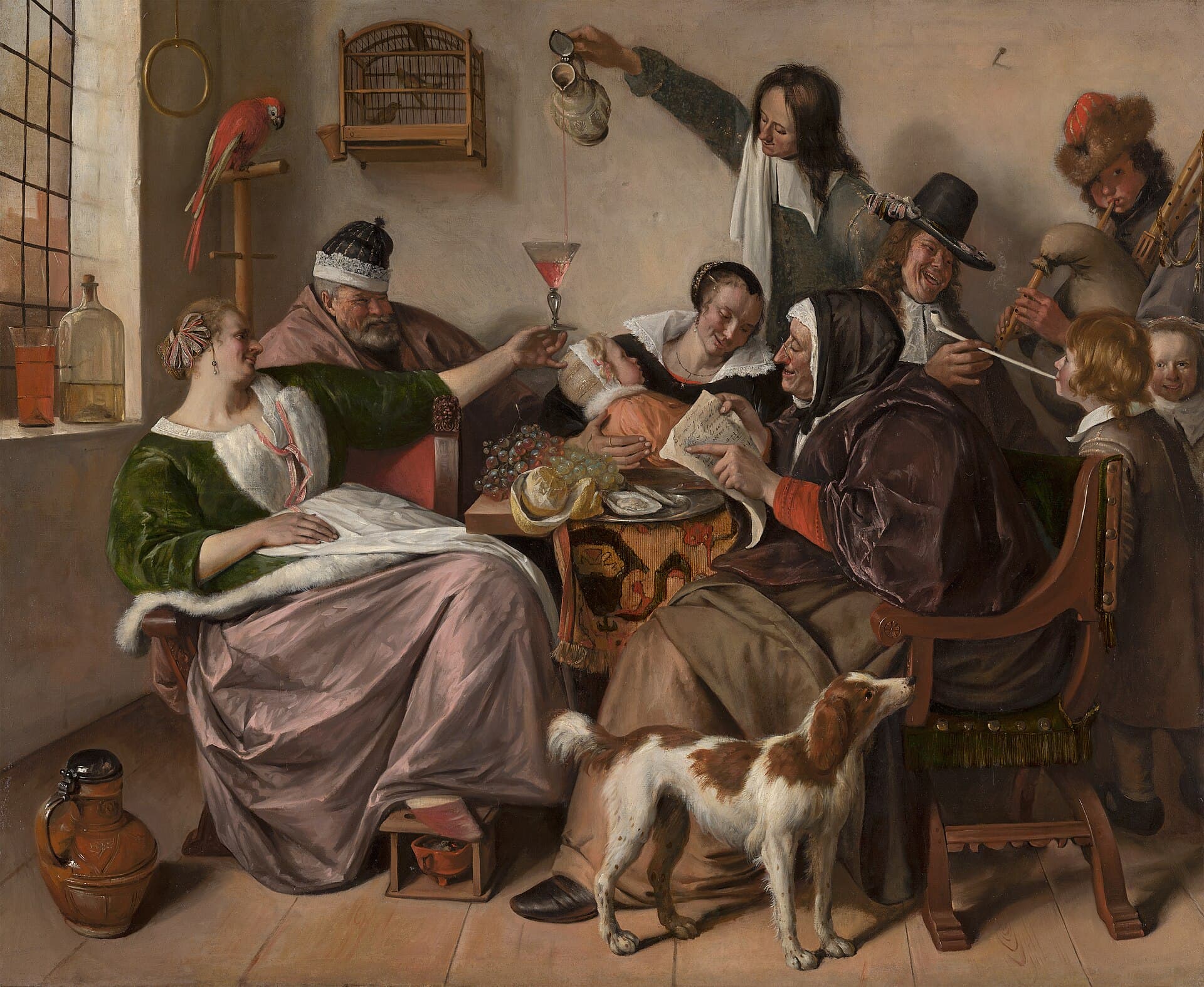
The room
Most of us carry a background sense that somewhere the serious problems are being handled by serious people, that there is a room with adults in it who have the whole picture and are doing what it requires.
Go looking for that room and you find a great many people, each fairly sure the adults are in a different one. The scientists have said their part and are waiting on the politicians. The politicians can read a poll and are waiting for the public to want it badly enough to make acting survivable. The public is waiting for an instruction that never arrives in a usable form, and mostly waiting to be told it is fine.
The politicians are not only waiting. We are spending the atmosphere down now, and the bill lands on someone specific: whoever is trying to live somewhere in 2075, who is owed a world and is getting this one. The move that would answer to them is less: less flying, less meat, fewer of us. A politician who says so is unelectable. So is one who says to have fewer children. No majority forms behind either. When people say they want change, they mean change that costs someone else some comfort, or someone else a child. So the seat that could act stays empty, kept that way by the people who would fill it.
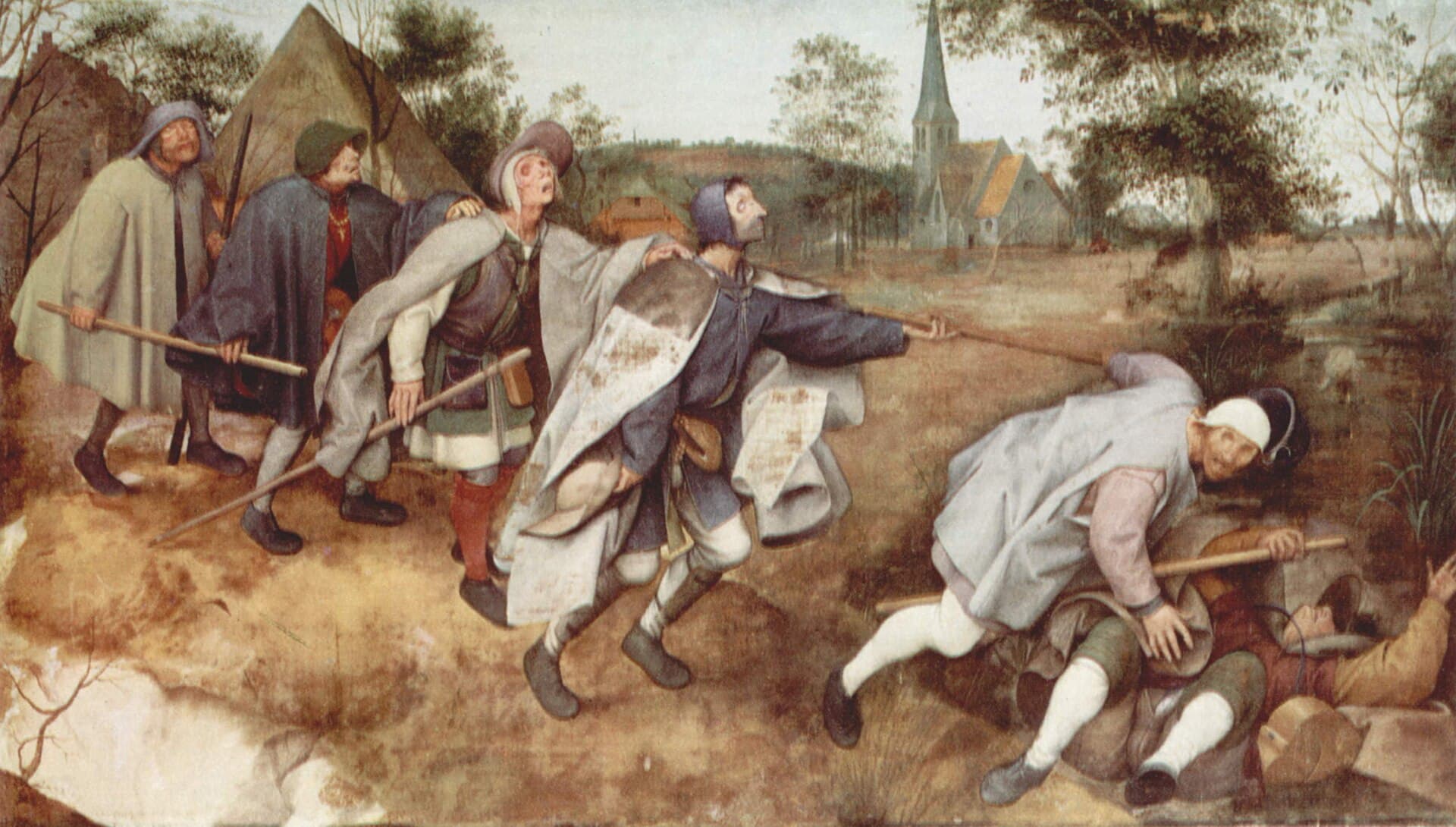
The mechanism is not cowardice. It is that a responsibility spread across everyone rests on no one. In the old experiments on this, a person alone in a room slowly filling with smoke gets up and reports it; the same person, seated with others who do nothing, stays put, reading their stillness as the all-clear. You get people waiting, in good faith, for an adult who is also in the room, also waiting.
There is no separate room, and no separate kind of person. "Adult," in the sense that matters here, was never a population. It is a posture, and it is easiest to see in the smallest case, so go back to my father.
It's my freedom. He was right that the drinking was his to do; nobody was going to stop him and nobody should have tried. What the sentence did was slide from there to something else: that because the drinking was his to do, the question of what it did to the rest of us was closed. Those are two claims, not one. The first is about who gets to decide. The second is about who is owed an account of how the decision landed. He held the first and behaved as though it settled the second.
Call the first being in charge and the second being answerable. My father had the first in full, which is exactly why it does not settle anything: you can be answerable to someone you have no power over and will never meet, purely because your conduct reached them.
The opposite of being answerable is jurisdiction: setting your own judgement up as the standard other people have to meet, while you owe nobody an account back. "It's my freedom." "I was only doing my job." "This is just how the system works." The same move at three sizes: the father, the clerk, the institution. And almost everything we call "the adults" is built for the jurisdiction side and not the answerable one. The ministry, the seat of government, the boardroom: each has a department for issuing the standard and none for being held to the result.
The one actor that ever moved, in my childhood, was the province, when it made the car a place my mother could not legally smoke in with me. It was real, it was protective, and it came with an age written into it. On my sixteenth birthday the government's interest in my lungs lapsed on schedule, and everyone treated that as the natural end of the matter.
Years later I got the fuller version. Through 2019, in London, Ontario, my mental health was coming apart, and I was in the regular care of a psychiatrist, the person that situation is supposed to route you to. Partway through, I learned he had been publicly tied to a Canadian ultranationalist party whose founder was later charged with wilfully promoting hatred against Jewish people. Something in me gave out when I learned it. I decided to die, and the police reached me first, and I spent two weeks on a psychiatric hold. He kept practising, a few floors down, adjusting other people's medication, while I sat upstairs. The verdict, delivered between a shrug and an apology, was that there was nothing to be done, that this was simply how the machine was arranged. Everyone in the building was doing their job.
Oliver
We have a cat named Oliver. He is six. Since last November he has been living on the edge of heart failure. We keep him going with four drugs on a schedule that structures our days, and we have spent more than five thousand dollars on scans and bloodwork. There is a surgery that might help him; no surgeon I could find performs it on cats, or we would have paid for that too. We have assumed responsibility for him, and there is almost nothing within our means we would not do. We are also not sure, on any given day, that we love him, or speak for him, as well as he is owed.
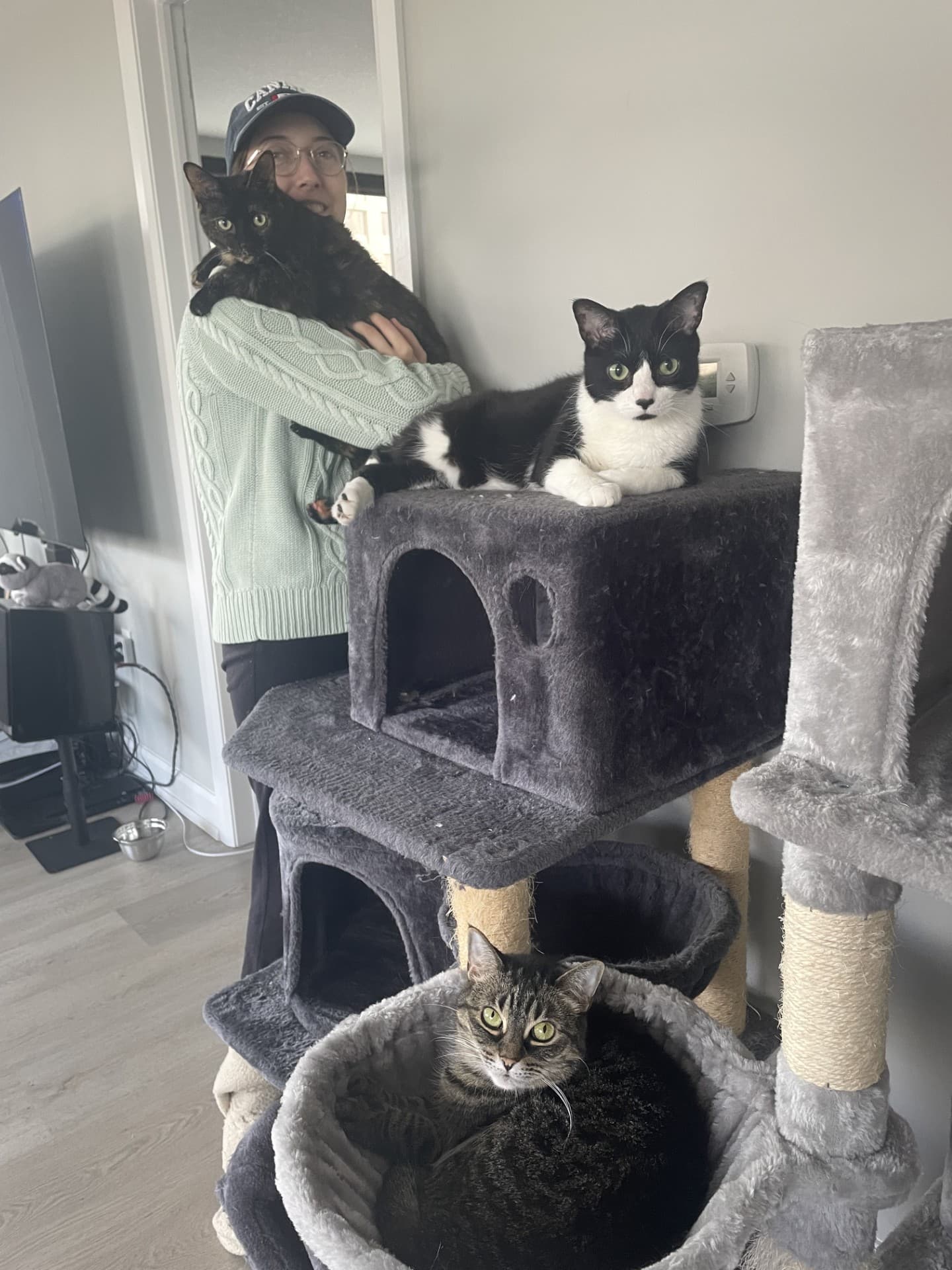
When he goes into respiratory distress he plants himself in a breathing stance, mouth open, and starts to drool. We stop everything, get the emergency medication into him, and keep him calm. The drive to the vet frightens him enough that it could bring on the heart attack we are trying to prevent, so we ride it out at home now, never sure we will not lose him.
You can buy a whole chicken — someone's entire life — from Costco for under ten dollars.
The whole subject is the distance between what we will pour into the one animal we have named and what we do to the ones we have not. A kinder barn answers the question how much did she suffer. It does not touch the question was she yours to breed and kill, whether the arrangement should exist at all.
Take the chicken and ask what she actually is. Her wanting to live cannot outweigh the use we have for her; no amount of it changes the plan, because the plan is why she was bred. Nothing she does reaches the part of the process that would have to give: not distress, not preference, not anything that would count as protest. And someone is better off for her being used in exactly this way. When all of that holds at once, she is not a party being treated well or badly. She is material. It holds in the worst barn. It holds in the kindest one, because a wider crate and a quicker death change how much she suffers and leave the rest untouched. Welfare is real. It is not the question here.
Oliver cannot lodge a complaint. We move the earth for him because we decided to be the people who answer to him. The chicken cannot lodge a complaint either. Nobody decided to be those people for her, so her account never opens. It is the same claim. The only difference is whether someone took the other end.
I have spent years as an abolitionist and I have not made my peace with the number. Seventy billion land animals a year, killed for flavour, in buildings the roads are routed around so the trucks are the only part anyone sees. It is the largest deliberate killing there has ever been, by a distance, and the people who run it are not hiding; they sponsor the game on the television. No one is ashamed of it, not the ones who run it and not the rest of us, and that is the part I have never found a way around.
I have sat beside those trucks at a red light on the way out of the city, close enough to see an eye moving at the gap between the slats. Then the light changes and the truck goes one way and I go the other.
Who it lands on
That truck is the ordinary case, not the extreme one. The parties that the largest harms land on are, overwhelmingly, in no position to say so. An infant is owed things it cannot ask for. Someone downwind of a decision made on another continent is owed an account they will never be in the room to hear. The person who does not yet exist is owed the world we hand them. (I am an antinatalist: I do not think that person should be made at all.) And the animals are owed the same, in numbers nothing else touches: the seventy billion again, and, counted rather than weighed, fish in the trillions.
None of these parties can collect, and that is the point at which people quietly write them off. But Oliver cannot collect either, and we do not write him off; we act on what he is owed precisely because he cannot demand it. Whatever it is that he has (call it standing), the infant has it, the chicken has it, and someone who will be alive in 2075 has it. It does not arrive with a voice or a vote and it does not shrink in the absence of either. Being unable to press a claim changes what happens to it in the world. That inability changes nothing about whether it is owed.
There is a name for what we do with Oliver, though we do not use it out loud. He cannot tell us what he wants, so we find out what is actually good for him instead of what is convenient to assume; we keep the record, every scan and the four drugs and the schedule; we do not spend his share because he cannot object. That is trusteeship. It is the whole of what is owed to a party who cannot collect. Applied to the chicken it rules out almost everything we do to chickens. Applied to whoever is alive in 2075 it rules out using up the atmosphere on the assumption that we owe nothing to anyone after us. The one thing a trustee cannot do is sign for the other party. Silence is not a yes, and a confident guess about what someone would want is not their voice. That guess is the move in "she had a good life" and in "they will thank us later."
We talk about the climate, the biosphere, the future, the species, as though each were a patient owed a rescue, and not one of them is. Add a billion animals together and you do not get a bigger animal who can be wronged or made whole; you get a number, and you cannot apologise to a number.
This is why the institutions cannot do what we are waiting for them to do. They take in totals and put out totals. Ask one for the account owed to the animal whose eye I saw at the gap in the slats, and it has no field for the answer.
The obvious objection is that this makes individual action sound like the only kind, when much of what is owed is collective. A ban, a tax, a treaty can close millions of accounts at once. That is worth wanting and worth working for. What it does not do is cover for you in its absence or settle what you owed in the years before it did. "Someone should pass a law" is true, and it is not an answer to what you owe today. It also runs into the wall already described. The public that would have to back it will not back the version that bites.
Most of us met this as children. A man walks a beach where the tide has stranded thousands of starfish, and throws them back one at a time; someone tells him the beach runs for miles, that he cannot possibly make a difference; he throws another: made a difference to that one. It was on a poster in my grade-five classroom. Loren Eiseley's essay "The Star Thrower," where the line comes from, restores what the poster left out: the tide will strand more by morning, the collectors will be back for them, and the man throws them back anyway, with no expectation that it turns anything. The comfort is not that the throwing adds up. It is that you can refuse to be one more person on the beach with somewhere else to look.
No clean hands
Judging an arrangement is not judging the lives lived inside it. A practice can be rotten while the people staffing it are decent. Often they are the only ones who know the affected parties as individuals at all. Contempt for them is a mistake, but it is not the same mistake as letting them off.
It is tempting to sort people into two kinds. The first has had their options narrowed until only the wrong one is left: the borrower taking a payday rate because the alternative is collections, the worker who cannot afford to quit, the person an arrangement has turned into infrastructure. The second has followed the argument, at leisure, with alternatives within reach, and buys the chicken again next week because thinking about it is unpleasant. But the line between them is a scale, not two boxes. It comes down to cost and what you can spare: beans instead of the cheap chicken is nothing to me; a real subtraction from a food budget already too short for someone else. The nearer you are to the end where the better option costs you almost nothing, the less your silence has to stand on. My parents were near that end. On the days I let myself off with "the system is rotten anyway," so am I.
I have cut what I can find to cut: no car, vegan, no children. The cuts are worth making. The tally is the part that misses the point.
My job is selling personal loans to Americans and taking the servicing calls. Normally I work in software; the work dried up, my ADHD made a hard stretch harder, I was unemployed for six months, and this is the job I got. By the test I used on the payday borrower earlier, I am the squeezed kind; by the one I used on my parents, I saw the shape of it and took the work anyway. The people who take these loans are usually desperate. Usually they are covering a bill a real health system would have absorbed. The interest costs them years. Customers can turn autopay on from the dashboard in one click. Turning it off means calling in, and those calls are most of my day. I think the asymmetry is deliberate, meant to keep repayment rates up, though no one has said so. Turning people into infrastructure is the product, and I am one of its moving parts. I do it forty hours a week so my family makes rent and Oliver keeps his cardiologist. A person telling you the adults aren't coming is also, on a headset, part of why.
Three times the same move. Each time I have been in a different seat. My father owed me an account and said I was making more of it than it was. The ward owed me one and produced a shrug and this is how the machine is arranged. Now, forty hours a week, I am the one who owes an account and withholds it by design, one click to start the payments and a phone call to stop them. I built the idea from the inside of that move, having stood on every side of it.
Which is a reason to check the idea, not to trust it. Put together by someone who spent years not being answered to, the idea could be nothing but the injury worked up into a theory. It could also be that the injury is what let me see the shape. I cannot tell which from in here.
The smoke
There is an unofficial policy nobody votes for and almost everyone obeys: better not to look too hard. "Ignorance is bliss" is the only proverb that admits, mid-sentence, that you already know. The sociologist Kari Norgaard spent a year in a Norwegian town where everyone had the facts about the climate and had quietly agreed, all the same, on how much of it was normal to say and feel, so that daily life could keep its shape.
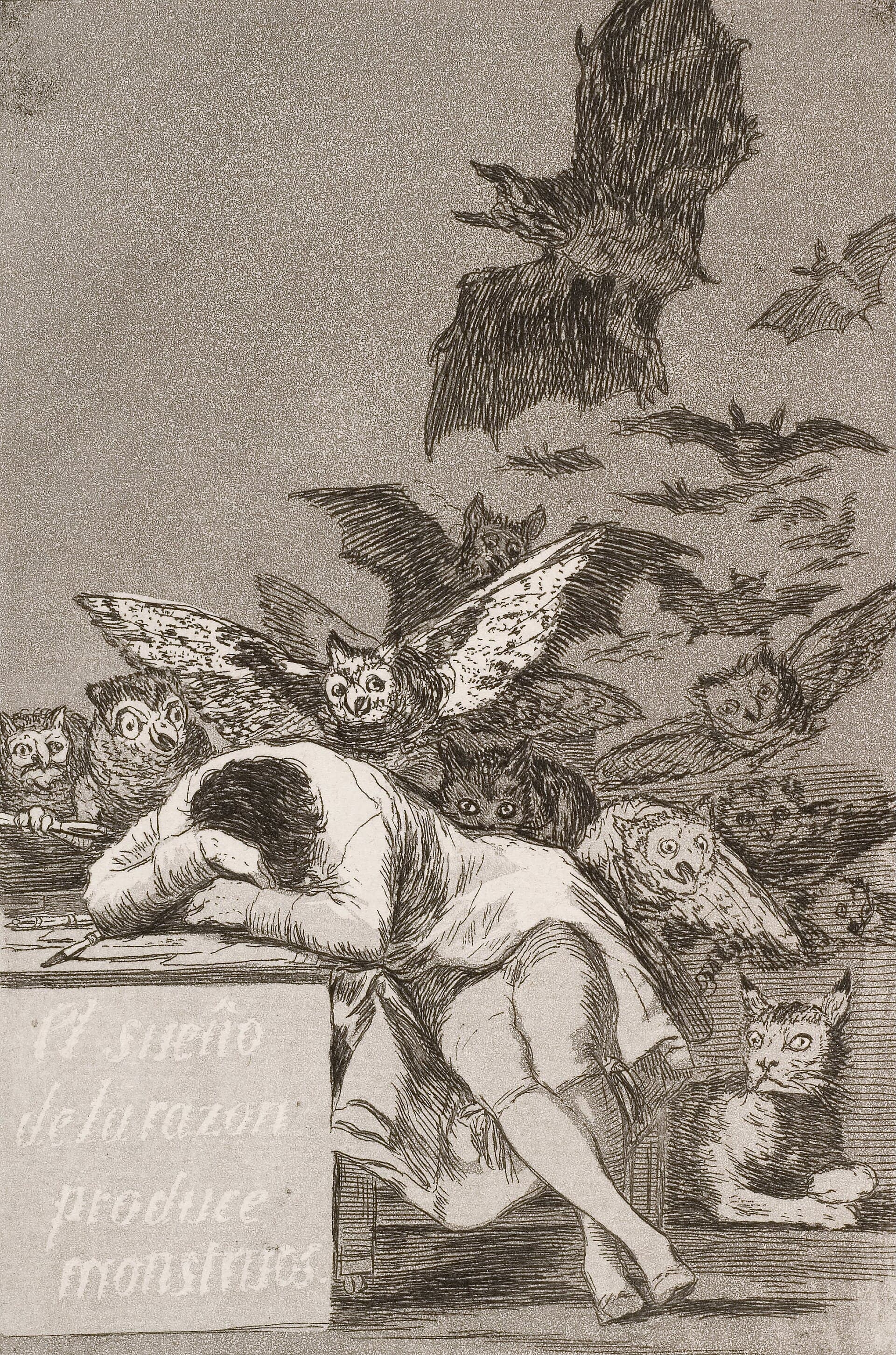
A lot of the not-looking is manufactured, by people paid to manufacture it. From seventeen to twenty-two I smoked a lot of weed, the exact customer that apparatus is built for, and I kept buying it after I had worked that out.


,_from_Los_Caprichos_-_Google_Art_Project.jpg)
What the town did, most people do: hold the knowledge at enough of a distance that the day stays liveable. Almost none of it is a decision anyone makes. The person who cannot, who keeps feeling the whole of it, is not broken. They are missing a damper most people have.
What it feels like, day to day, is the urge to talk about it for an hour and then the flat place at the end where there is nothing more to say. It is giving up, over and over, and accepting that I will not change how human brains or human cultures work in the time I have, or in the time that is left. And the harder part: the case against being here at all is not one I have refuted. When I was younger the clarity itself was part of what made me suicidal, and on a bad night it still does. What I have done is decide, and keep deciding, that the argument does not get the last word.
If you are young, seeing the size of this clearly, and being told you are making too much of it, you are not misreading anything. The seeing is not the dangerous thing. What is dangerous is being told, for years, that there is nothing there: that you are dramatic, that you will grow out of it, that the problem is your attention and not what it is fixed on. If the clarity has still left you suicidal, the move is to stay, and to get the kind of help that keeps you here. And the case against a life being started is not a case for a life being ended. Those do not follow from each other. No one outside your life gets to rule on whether it is worth living, not the people telling you to relax and not the ones holding the argument.
It may be worse than personal. We spend the time we have left sorting ourselves into sides and fighting across the lines, over a border or a faith or an identity or an old grievance, while the house fills with smoke. The sorting never resolves and it never stops. I have come to think it is not a habit we could train out of ourselves. It is closer to what the species is.
From there, some reach for a switch. The efilists give it a name, the benevolent world exploder: one button that ends all sentient life at once, offered as mercy. Strip the mercy off and it is the jurisdiction move at full size: every life summed into a total, the total ruled not worth living, the ruling imposed on all of them at once, no one answerable for any of it. But whether a life is worth continuing is the one verdict that belongs only to the one living it, and a total has no life to weigh. The mercy, besides, has no one to receive it. The despair behind it is honest; the rest is a category error, the kind that ends with someone building a bomb.
Nothing in any of this licenses a hand laid on anyone. Not the switch, not forced sterilisation, not so much as contempt for the person buying the chicken. The argument is about what you owe, not about what you may make someone else do, and the moment it becomes the second thing, it is the posture it was written against.
Almost everyone I have looked to has disappointed me, and I have stopped treating that as a run of betrayals and started treating it as information. Alan Watts, whose talks I lived inside for a year, turned out to have lived very little of what he said. The lesson is not that everyone is a fraud. It is that "find the adult and follow them" is the wrong move, because the adult is a role and not a person, and whoever you put in it steps out of it eventually, in a direction you did not see coming.
I do more than keep my own account. I moderate a community of hundreds of thousands, build tools, and keep federated infrastructure running for people who want off the big platforms. One larger swing, a movement with a name and a manifesto, went wrong enough that I had to shut it down myself, and I have not fully trusted my own certainty in front of an audience since.
The rest of it is smaller and unglamorous. In July it meant banning someone who had announced a plan to slip an abortion pill into her sister's food. That is the switch at kitchen scale: a body summed into someone else's arithmetic, the sum judged, the judgement carried out with the person in it never asked, and the whole thing proposed by someone who reads the same forums I moderate. Weeks later, Playboy ran a piece on the community under a headline that had every one of us hoping humans go extinct, and the distinction I spend my time enforcing did not survive the summary. What I have stopped believing is that the small, unscalable things are a warm-up for the real work. They may be the real work. I have spent years on the other kind, and this is what is still standing.
What is left is to stop waiting, stop looking for the adult, and keep the account yourself, at whatever scale your hands reach. It does not feel like authority. It feels like staying on the hook for something everyone around you has agreed is settled. On an ordinary Tuesday it looks like almost nothing: the cat's medication, a game with a friend in New Zealand who only ever wants to talk about the game, nothing taken from anyone in either direction.
The hardest case of this is the one where keeping the account means not opening it at all. The last party still entirely in my power to answer to is the person who does not yet exist, and the answer is not to make them. This can sound like a contradiction: keep the account everywhere, except here, where you keep it by doing nothing. I do not think it is one. Declining to make someone is not a step back from the work. It is the work, at the one point where what a party is owed is not to be brought under the decision at all.
There are two claims in that, not one.
The first is about deprivation. Everywhere else, a party who cannot collect is a reason to act as their trustee. The person not yet made is the exception, because of an asymmetry. Make a person and there is a subject the decision runs to: someone who will carry the body and the needing and the death, and who was in no position to be asked. Do not, and there is no subject on the other side. No one is held back from a life they were hoping for. No one is deprived, because a deprivation has to land on somebody, and somebody who is never made is not one. One option puts a real party under a decision they could never authorise. The other affects no one, because on that side there is no one.
That first claim is the whole of the difference between this and the switch: making no new person takes nothing from anyone who already exists. It also cuts both ways. For the person not made, there is no one to spare, since there is nobody there; what is spared is everyone a new life would have landed on, in a species that cannot stop adding to the harm it already does. If enough people came to the same place the line would end, with no one having had it done to them. That is the only ending I would have standing to want, and it is not mine to bring about.
There is a second claim, and it is the one I cannot check from outside. It is that the making is wrong in itself, whatever the life turns out to be. Even a child glad to have been born was still committed in advance to a whole life by someone who was not that child. It is a judgement about what may be done to a person, not a forecast of how the person will fare, and nothing above forces it. It is also the kind of claim that the doubt I raised earlier was about: a demand for an account, made by the one person here who cannot tell whether it is the framework talking or the injury. I hold it. I am not going to dress it up as more than that, and if you weigh it differently I do not have the thing that would move you.
If there is a comfort here it is company: other people who never closed the same account, who stayed on the hook for it after everyone around them signed off. They are quieter than the ones telling you to relax, so mostly you meet them one at a time, by accident. Finding one does not fix anything, and it does not make the seeing easier to carry. It only means you are no longer the only one who kept the account open, which on a bad night can be enough.
The comfort in this essay is a human privilege. I built it around the voiceless and it reaches none of them. There is no version of it that reaches Oliver.